
Piano / PIA & SING
A simple left hand that keeps the song moving
Start with the main beats before adding a busier pattern.
Practical suggestions for hobbyists, not a guaranteed training programme. Adapt to a comfortable level and stop if you feel pain or tension.
In this article
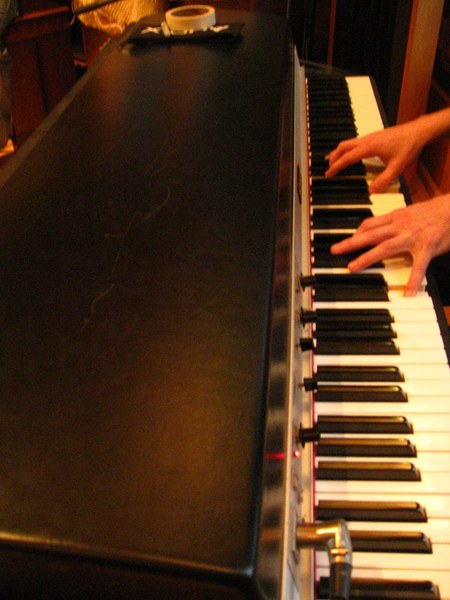
The left hand does not need to play constantly to do its job. In early accompaniment practice, a clear harmonic foundation and dependable pulse may be enough.
Start with bass notes and change points from the lesson rather than inventing extra notes for fullness. If octave jumps create tension, use a smaller distance or a single note.
The left hand should keep its task manageable when the voice joins. If excitement makes the pulse rush, return to tapping and a slower version.
Try it step by step
- Tap the pulse of a short passage.
- Play only bass notes at the change points.
- Add simple right-hand chords without increasing the left-hand task.
- Hum a phrase and check for rushing.
Check before making it harder
Is the left hand as steady with the voice as it is without it?
A song to try this with
 The Lazy Song · Bruno Mars
Use a short passage from The Lazy Song to reduce the left hand to its main points. This is a practice adaptation, not a new transcription.
This is a suggested way to use the song, not a universal difficulty rating or key recommendation.
More in this category

References and further learning
No additional verified learning link is listed for this article. Use the exercises as practical suggestions, not a guarantee of results.